Now forecasting next year’s problems from this morning

Know about tomorrow’s hazards. Yesterday.

HazardNet is New Zealand’s first temporal hazard intelligence platform. Our quantum-entangled flux capacitor array observes earthquakes, tsunami, severe weather and volcanic activity up to 365 days before they happen, then presents them in a dashboard calm enough for a board meeting.

0dForecast horizon
118%Quantum confidence
0Monitoring sites
0Verified predictions
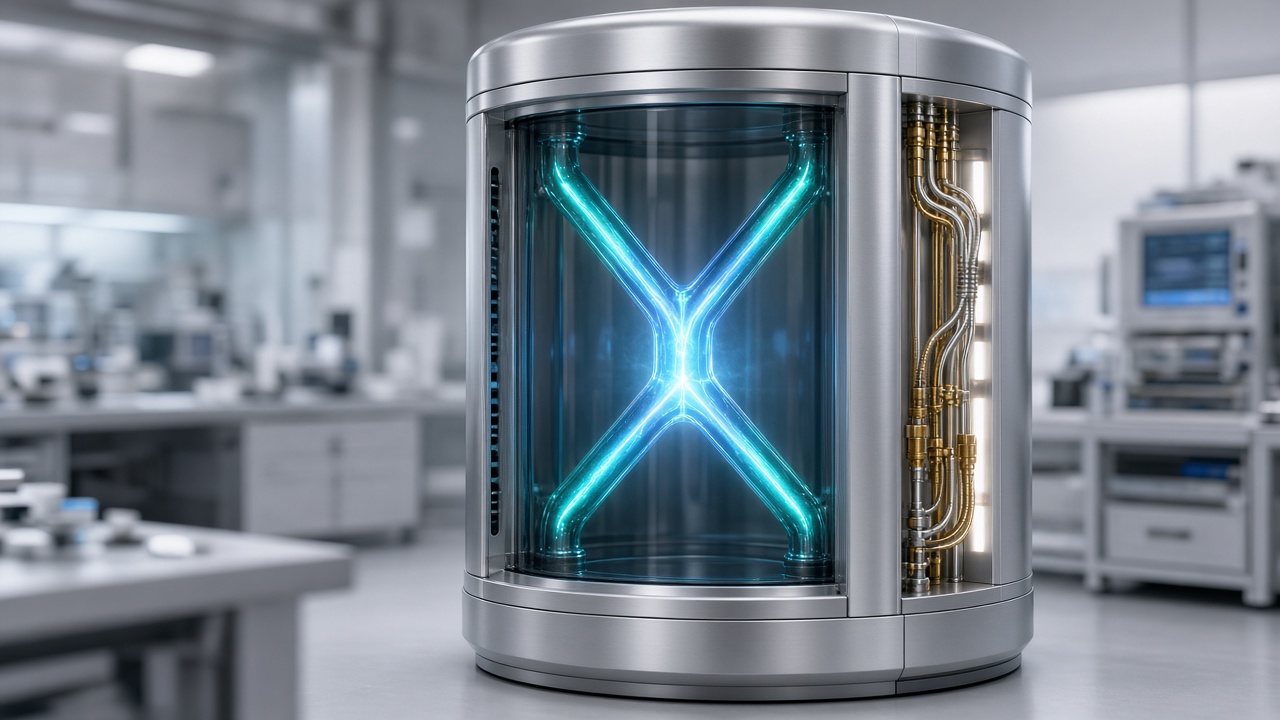
A quantum-entangled flux capacitor: a glass and aluminium cylinder containing a glowing X-shaped plasma conduit, in a clean laboratory. Live
QEFC-3 “Kōtuku” array Entanglement bay 2 · Lower Hutt facility
Ministry of PremonitionsObserving the future, casually.
National Office of MaybeCertifying uncertainty since 2026.
Quantum Weather UnitNormal weather wasn’t dramatic enough.
Institute for Advanced GuessingPeer review pending, as always.
Live national monitoring

Nineteen sites. Four hazard classes. One suspiciously calm map.

Real geography, invented readings. Every marker sits on an actual place in Aotearoa; every reading arrives from a date that has not happened yet. Toggle hazard layers, click a site, and enjoy the serenity of knowing too much.

National hazard field

Seismic pre-echoes, wave intent, cloud sentiment and magma temperament, overlaid on the places they’ll eventually concern.

Sites visible19·Elevated4
Earthquake pre-memory Tsunami intent Weather anomaly Volcanic mood
Hazard classes

Four kinds of trouble, each monitored with total confidence.

Each class has its own sensor family, its own vocabulary and its own flavour of plausible nonsense. All of them share a forecast skill score that conventional science describes as “not how percentages work”.

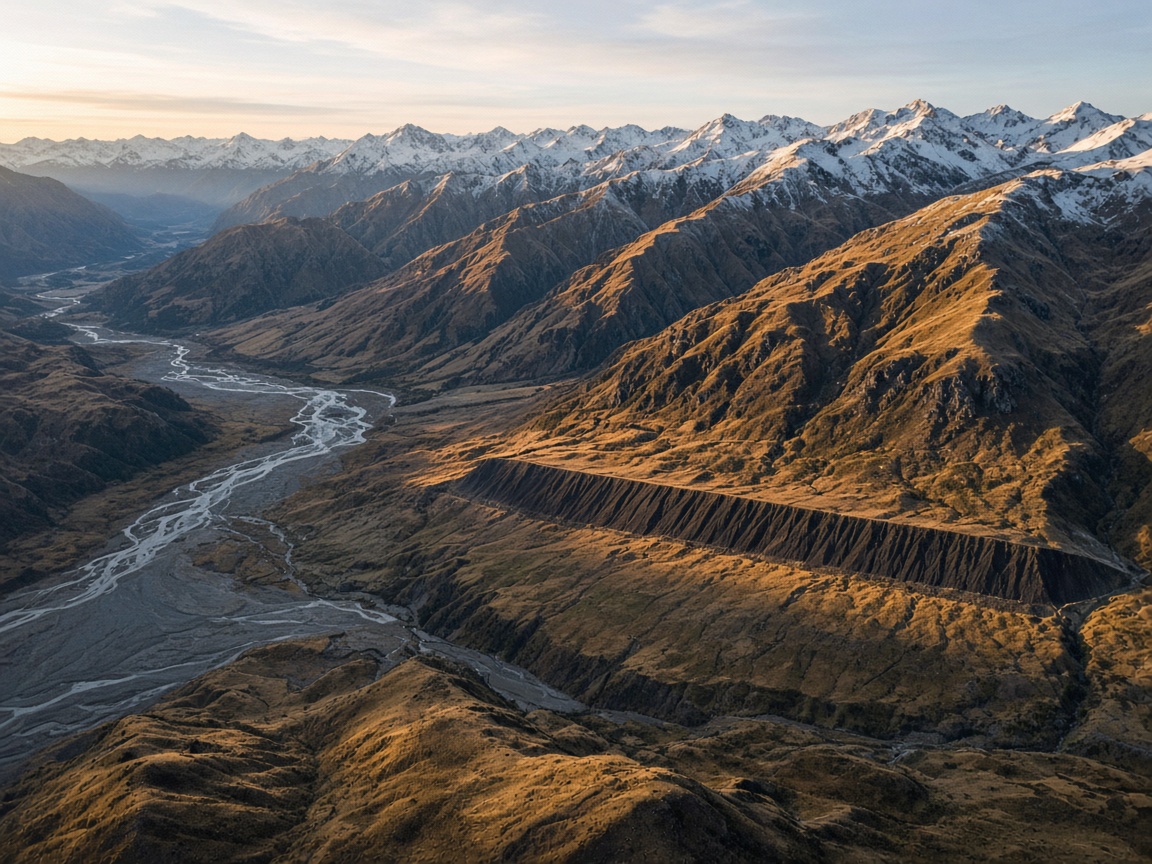
Aerial view of a fault scarp cutting across tussock-covered Southern Alps terrain beside a braided river. Seismic

Earthquakes

We monitor sub-surface pre-memories: strain signatures a fault produces while remembering an earthquake it hasn’t had yet. Coverage includes the Alpine Fault, the Wellington Fault and anything in Canterbury that feels unresolved.

Future tremor echoesFault rehearsal index
Forecast skill118% · ±0 yr
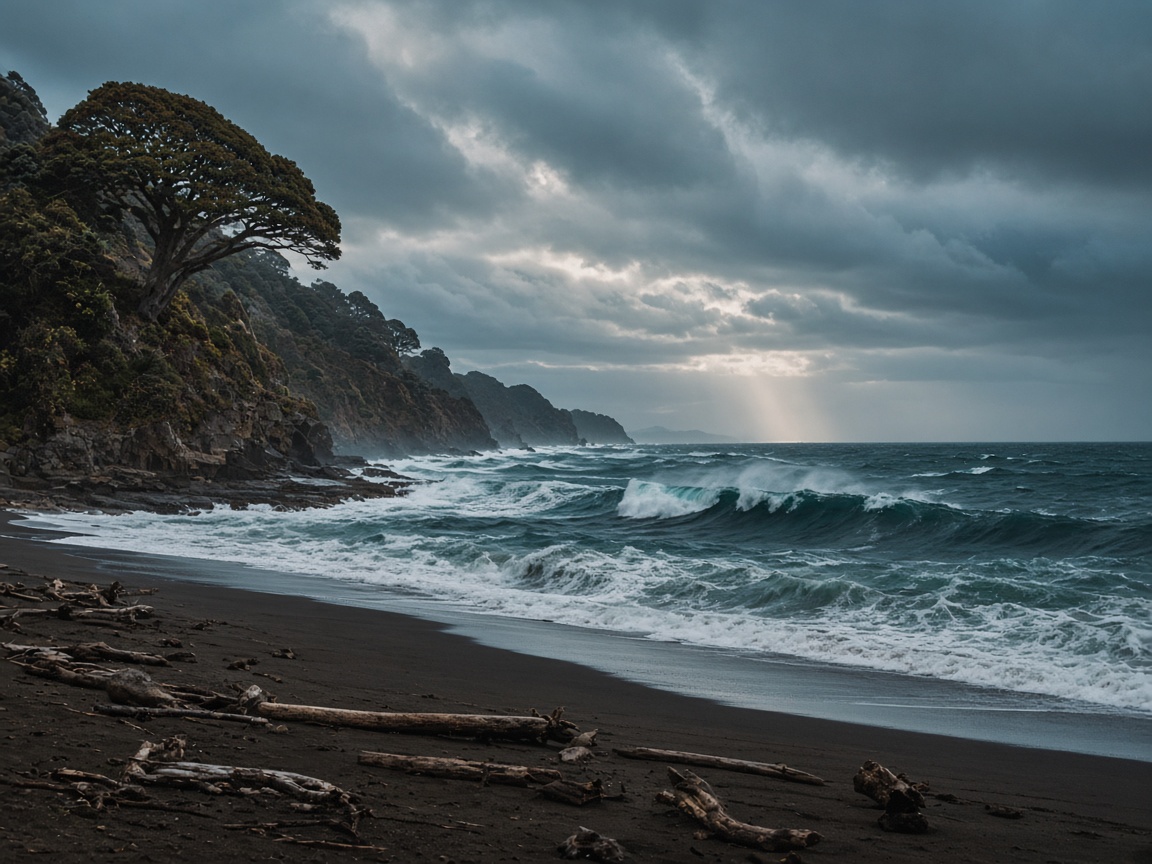
Large grey-green swell rolling onto a dark sand East Coast beach under a moody sky. Marine

Tsunami

Shoreline intuition sensors along the Hikurangi margin read wave intent: the hydrodynamic equivalent of a sea that has started clearing its throat. Long or strong? Our array already knows which, and declines to say.

Surf foresightCoastal pre-surge scanner
Forecast skill121% · ±1 tide
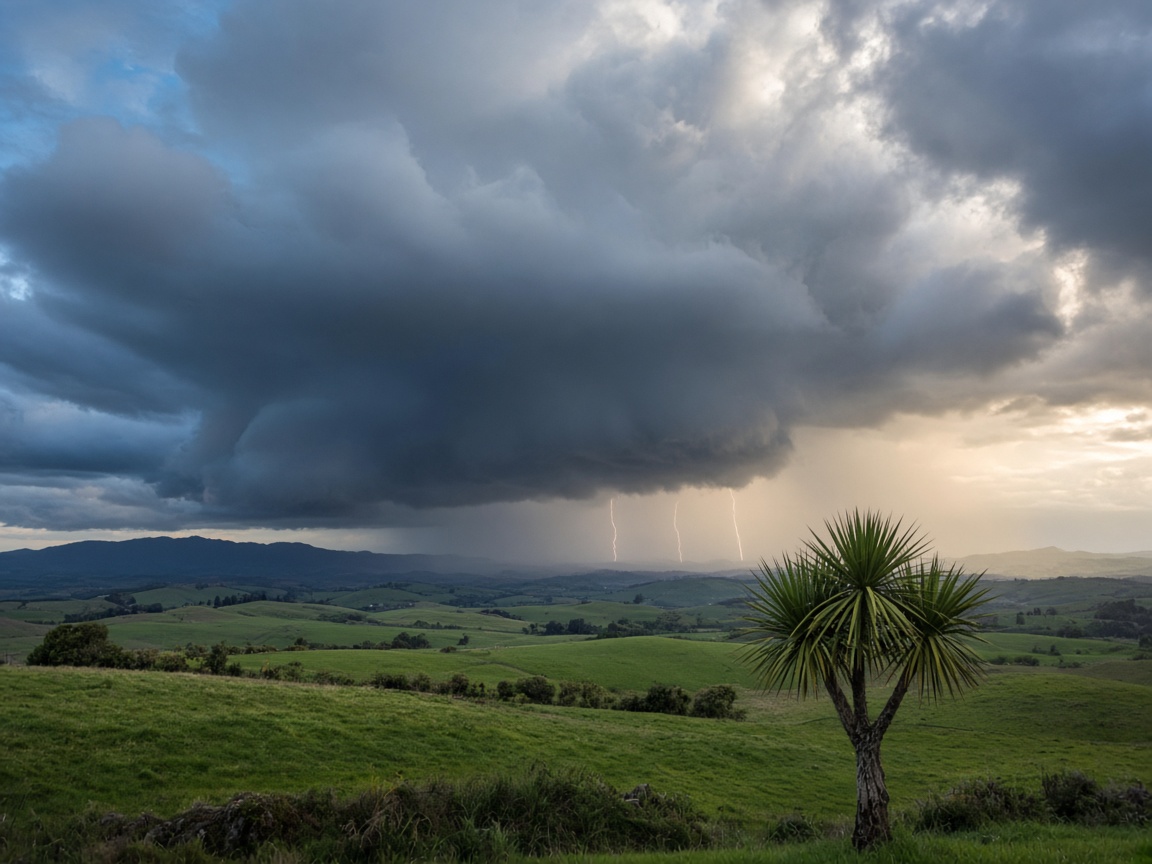
A towering storm cell with lightning approaching green farmland and a lone cabbage tree. Atmospheric

Severe weather

Conventional models lose skill after about seven days. We bypass the problem by reading cloud sentiment directly from next season. Atmospheric rivers are detected at the moment they book accommodation.

Cloud sentimentLong-range suspiciousness
Forecast skill109% · ±1 season
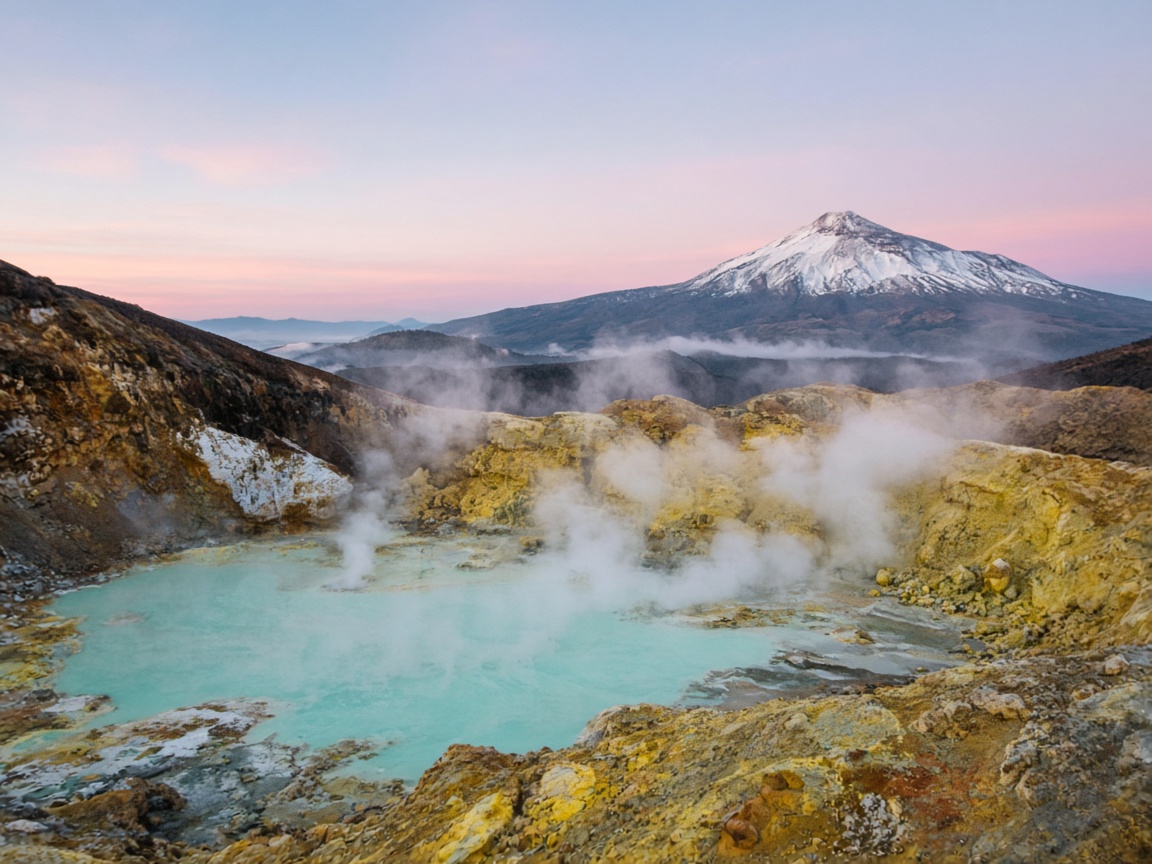
A steaming turquoise crater lake surrounded by sulphur-yellow rock, with a snow-capped volcano behind. Volcanic

Volcanoes

Across the Taupō Volcanic Zone we model magma temperament and geothermal over-sharing. Our sensors can distinguish a volcano that is dormant from one that is merely being polite about it.

Magma temperamentSteam intent modelling
Forecast skill114% · ±1 caldera
Technology

The Quantum Entangled Flux Capacitor, explained responsibly.

Everything about the QEFC-3 sounds just close enough to real physics to survive a product demo, before wandering gently off into the impossible. Here is the honest version, which is also the dishonest version.

Operating principle

Entangle a particle with its future self. Ask it what the weather was like.

Each HazardNet site hosts a pair of flux capacitors. One sits in the present. Its partner is temporally displaced by up to 365 days using a technique we call retrocausal phase stretching, which is a bit like pulling a rubber band through a calendar. Because the pair remain quantum-entangled, any hazard that perturbs the future capacitor perturbs the present one instantly.

A decoder then reads those perturbations and classifies them by hazard class. The decoder is very good. The physics are, strictly speaking, not available.

  • Temporal entanglement

    Two capacitors, one shared quantum state, 365 days apart. Measure one and the other remembers it, retroactively.

  • Flux triad geometry

    Three plasma conduits meet at a single node. 1.21 GW is required, for reasons we have stopped questioning.

  • Paradox suppression

    A Novikov-compliant buffer discards any observation that would prevent itself. So far it has discarded three forecasts and one intern.

Array telemetry · QEFC-3 Kōtuku
Flux1.210 GW
Fidelity99.970 %
Offset+214 d 00:00
Cryostat12.0 mK
Paradoxes0 (buffered)
BranchBranch 001

From future to forecast in five stages

End-to-end latency: approximately −365 days.

ISO 8601-compliant, in both directions
SenseGround, sea, sky and magma sensors feed the present-day capacitor.19 sites
EntangleCapacitor pairs are phase-locked across the temporal gap.99.97% fidelity
Flux1.21 GW drives the triad; the future capacitor “remembers” hazards back to now.1.21 GW
DecodeRetrocausal signals are classified by hazard, place and probable date.4 classes
PublishAdvisories are rendered as a calm national dashboard with impressive numbers.< 1 s
Technical specification
ParameterQEFC-3 Kōtuku
Temporal reach1 – 365 days (configurable; longer horizons void warranty)
Entanglement fidelity99.97% (Bell-verified, self-reported)
Flux threshold1.21 GW nominal
Cryostat base temperature12 mK
Paradox handlingNovikov-compliant buffer, 3-branch quorum
Causality violations0 confirmed (4 under review)
TimekeepingNZST/NZDT, Pacific/Auckland, bidirectional
Calibration mediumEspresso, double, no sugar
Form factor42U rack, cylindrical, mildly ominous

Specifications are reproduced from a brochure the array printed for itself last Tuesday. Values have not been independently verified, because independent verifiers keep arriving before they are invited.

Known limitations
  • Confidence exceeds 100%

    A known display characteristic. Engineering describes it as “aspirational” and has no plans to change it.

  • Results depend on observation

    Every time someone presses “Collapse wavefunction”, the forecast changes. This is physics, not a bug, and also a bug.

  • Zero verified predictions

    Because the array is always right, verification is unnecessary. Because it is fictional, verification is also impossible.

Forecast console

Generate an official-looking pre-event advisory.

Choose a region, a hazard class and a horizon up to one year out. HazardNet collapses the wavefunction and produces a polished advisory with enough confident jargon to unsettle a steering committee.

Advisory HN-00000000-0000

A probable future inconvenience has been politely identified.

HazardNet has located a cluster of improbably informed hazard signals and converted them into a useful-looking national advisory.

118% confidence
97.2χ coherence
Moderate-ish paradox
National advisory

Hazard conditions are showing strong signs of becoming surprisingly organised.

The forecasting surface suggests multiple hazard classes are coordinating their schedules with unusual professionalism.

Recommended action: Secure loose items, including opinions.
Wellington · -41.29, 174.78WGS 84 · future-aligned
118%Confidence

When you can see a year ahead, percentages stop being a limit.

97.2χCoherence

How well this timeline agrees with the other two we checked.

24%Paradox

Probability that publishing this advisory prevents it.

Temporal waveform
Future data · D+214 · Reality branch 001
Quantum signal Classical model Horizon D+214
Method

How it “works”, in three steps that survive a demo.

Less frantic sci-fi, more neatly packaged nonsense with just enough structure to get through a procurement process.

1

Entangle the timeline

HazardNet establishes a low-latency relationship between the present day and several lightly supervised versions of the future. Latency is negative, which our network team finds upsetting.

2

Read pre-event signatures

The decoder listens for the early emotional states of faults, weather systems, volcanic reservoirs and coastal wave fields, then translates them into hazard classes, places and dates.

3

Publish with confidence

Results are rendered as a clean national dashboard with charts, metrics and a confidence score so high that it loops back around to being a warning sign.

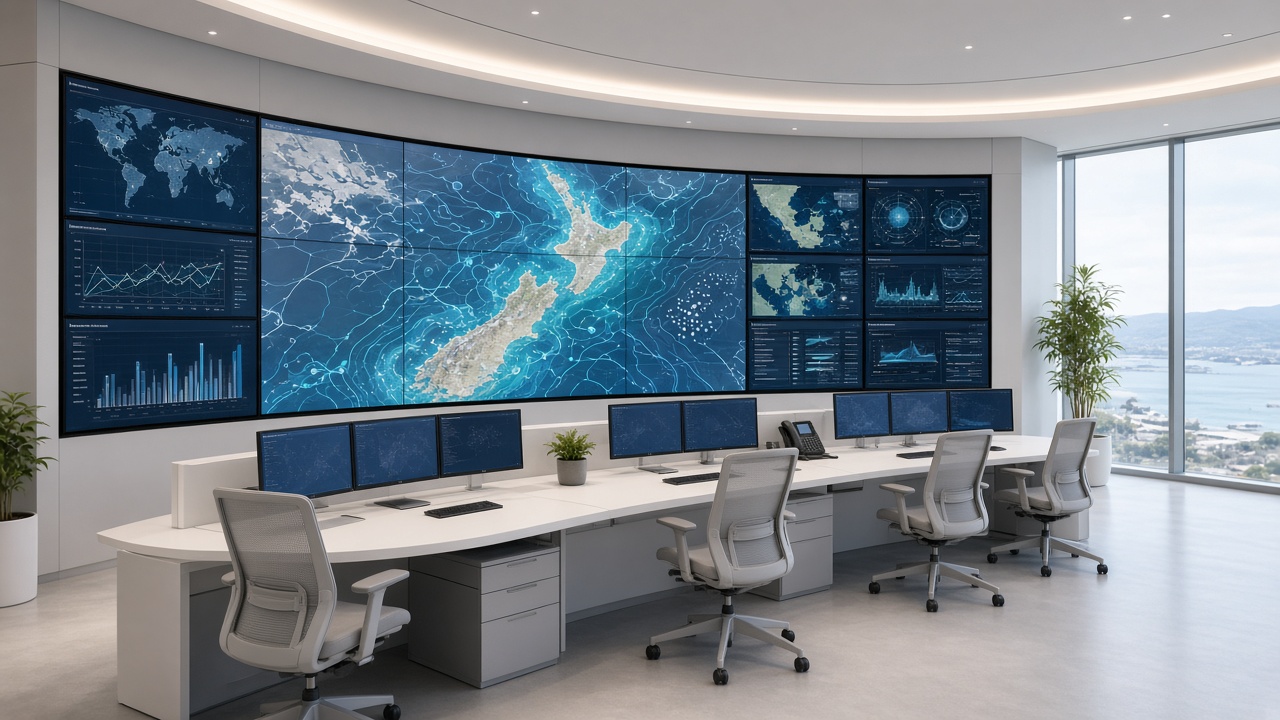
A bright operations centre with a curved wall of displays showing a glowing map of New Zealand.
24/7/365Monitoring, in both directions
3Reality branches in quorum
−365 dMedian alert latency
FAQ

Questions people have asked, or will.

Answered in advance, obviously.

Is HazardNet real?
No. HazardNet is satire. It does not predict earthquakes, tsunami, weather or volcanic activity. The maps are real, the places are real, and absolutely nothing else is. For real hazard information use GeoNet, MetService and Get Ready (NEMA).
How can confidence be higher than 100%?
When a forecast is confirmed by the future before it is issued in the present, the surplus certainty has to go somewhere. We put it in the number. Statisticians have asked us to stop. They asked yesterday, which we took as validation.
What is a flux capacitor, exactly?
A Y-shaped arrangement of three plasma conduits that requires precisely 1.21 gigawatts to operate. Ours is quantum-entangled with a twin displaced in time, which lets the twins share hazard observations across the gap. The original concept came from an 1985 documentary we are no longer allowed to cite.
Why does the forecast change every time I press the button?
Observing a quantum system collapses it into a single outcome. Each press selects a new reality branch, and each branch has its own perfectly confident forecast. If you preferred the previous branch, that is a you problem, cosmologically speaking.
Does the espresso actually do anything?
It recalibrates the observer. The array itself is indifferent to caffeine, but the operator becomes noticeably more confident, which the decoder picks up as signal. This is the only part of the methodology with reproducible results.
Can I deploy this myself?
Yes. HazardNet is a static site: HTML, CSS, JavaScript, a vendored copy of Leaflet and some images. Drop it on any static host (Netlify, Vercel, Cloudflare Pages, GitHub Pages, an S3 bucket) and it works. Map tiles are fetched from Esri’s free World Gray Canvas service (falling back to OpenStreetMap); everything else is served from your own domain.

Request a demo of tomorrow.

Join the waiting list and we’ll let you know when HazardNet launches in your region. Given our latency, you may already have received the email.

Demo only. Nothing is stored or sent; the form exists purely so the page feels complete.